|
Glaucoma Treatment: Eye
Drops and Other Medications
Eye
Drops and Other Medications:
Most treatments for glaucoma
are designed to lower and/or
control intraocular pressure
(IOP), which can damage the
optic nerve that transmits
visual information to the
brain.
Glaucoma eye drops often are
the first choice over
glaucoma surgery and can be
very effective at
controlling IOP to prevent
eye damage. If you are a
good candidate for glaucoma
eye drops, you may be
prescribed more than one
type to achieve the best IOP
control. In fact, many types
of glaucoma eye drops can
enhance the effects of other
types.
Depending on your general
health and other medical
conditions, however, you may
be a poor candidate for
glaucoma eye drops. This is
because medications placed
in the eye are absorbed into
the conjunctival blood
vessels on the eye's
surface. A certain
percentage of the active
ingredient of the
medication, though small,
will enter the bloodstream
and may adversely affect
functions such as heart rate
and breathing.
Likewise, some types of eye
drops may worsen certain
existing medical conditions
such as asthma. Some
glaucoma drugs also can
interact with other common
medications such as
digitalis, prescribed for
heart conditions. So make
sure you discuss these
issues with both your family
physician and your eye
doctor.
Types of Glaucoma Eye
Drops
Glaucoma eye drops are
classified by the active
ingredient chemical that
helps make the drug work.
Also, many of the glaucoma
eye drops listed here are
available in generic forms
at your pharmacy.
Prostaglandins: Drugs
known as prostaglandins used
in eye drops often have the
best user compliance because
they are required only once
daily. Prostaglandins
generally work by relaxing
muscles in the eye's
interior structure to allow
better outflow of fluids,
thus reducing buildup of eye
pressure.
These drugs have a few
common side effects,
including stinging and
burning when put in the eye,
eye color change (darkening
of the eye) due to an
increase of pigmentation in
the iris, and lengthening
and curling of the
eyelashes.
U.S. Food and Drug
Administration-approved
prostaglandins include
Xalatan (Pfizer),
Lumigan (Allergan),
Travatan Z (Alcon) and
Rescula (Novartis). Many
glaucoma specialists now
report that prostaglandins
have taken the lead in
recent years as a first-line
therapy for glaucoma
(EyeWorld, January 2007).
Beta-blockers: Used
in a variety of glaucoma eye
drops, beta-blockers were at
one time the drugs of first
choice in treating glaucoma.
These drugs work by
decreasing fluid (aqueous)
production in the eye and
now are often prescribed as
an adjunct to or in
combination with
prostaglandins.
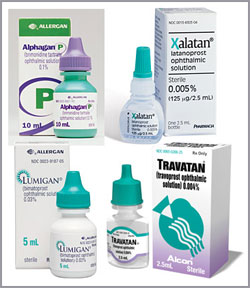
Various glaucoma eye drops
are classified by the active
ingredient chemical that
helps make the drug work.
These eye drops have the
potential to reduce heart
rate and may cause adverse
side effects in individuals
with certain heart problems,
lung problems (such as
emphysema), diabetes,
depression or other
conditions. For these
reasons, make sure you
discuss your medical history
in detail with your eye
doctor before using
beta-blockers.
Examples of beta-blockers
used in glaucoma treatment
are Timoptic XE
(Merck), Istalol
(ISTA) and Betoptic S
(Alcon).
Alpha-adrenergic agonists:
These drugs work by
decreasing rate of aqueous
humor production and can be
used alone or in combination
with other anti-glaucoma eye
drops. Common side effects
associated with this
classification of eye drop
include red or bloodshot
eyes (ocular injection),
upper lid elevation, an
enlarged (dilated) pupil and
itching. The FDA-approved
drugs in this class include
Iopidine (Alcon),
Alphagan (Allergan). and
Alphagan-P
(Allergan).
Carbonic anhydrase
inhibitors: These drugs
work by decreasing rate of
aqueous humor production.
They are usually used in
combination with other
anti-glaucoma eye drops and
not alone. This
classification of drug is
also used in oral form
(pills). Common side effects
experienced with this
classification of eye drop
include burning, a bitter
taste, eyelid reactions and
eye redness (ocular
injection).
The FDA-approved eye drops
in this class include
Trusopt (Merck) and
Azopt (Alcon). The
systemic (pill) form of
carbonic anhydrase
inhibitors (CAI) are
Diamox (Sigma),
Neptazane (Wyeth-Ayerst)
and Daranide (Merck,
Sharp, & Dohme). About half
of patients cannot tolerate
oral CAIs due to their
systemic side effects, which
include fatigue, depression,
loss of appetite, weight
loss, loss of libido, kidney
stones, metallic taste and
tingling in fingers and toes
(peripheral neuropathies).
Parasympathomimetics:
These drugs work by
increasing the outflow of
aqueous humor from the eye.
They are frequently used to
control IOP in narrow-angle
glaucoma. These eye drops
cause the pupil to
constrict, which assists in
opening the narrowed or
blocked angle where drainage
occurs. Common side effects
experienced with these types
of eye drops include brow
ache, pupil constriction,
burning, and reduced night
vision. FDA-approved drugs
in this class include
pilocarpine, carbachol,
echothiophate and
demecarium.
Epinephrine: The
epinephrine class of drugs
has a dual effect on the
eye. These drugs work by
decreasing the rate of
aqueous humor production and
increasing the outflow of
aqueous humor from the eye.
Common side effects
experienced with this
classification of eye drop
include pigmented eye
surface membrane
(conjunctival) deposits,
blocked tear ducts and heart
palpitations with an
increased heart rate. The
FDA-approved drugs in this
class include epinephrine
and Allergan's Propine
(dipivalyl epinephrine).
Hyperosmotic agents:
These drugs are usually for
people with a severely high
IOP that must be reduced
immediately before
permanent, irreversible
damage occurs to the optic
nerve. Hyperosmotic agents
reduce IOP by lowering fluid
volume in the eye. Usually
given only on a one-time,
emergency basis, these drugs
include oral glycerin and
isosorbide orally, and
mannitol and urea
intravenously.
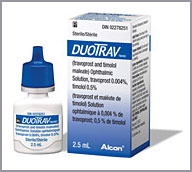
For convenience, two
different types of glaucoma
eye drops may be combined in
one bottle.
Combination glaucoma
drugs: Study results
show that half of
individuals with glaucoma
require more than one type
of medication to control
IOP.* For this reason, a few
ophthalmic pharmaceutical
companies have produced
"combination" eye drops that
can include two different
anti-glaucoma medicines in
the same bottle.
For convenience, your eye
doctor might prescribe
combined IOP-lowering
medications. Typically,
these combined medications
have the additive effect of
reducing IOP. Examples of
FDA-approved medications of
this type include Cosopt
(Merck), Combigan
(Allergan) and DuoTrav
(Alcon).
|


